

Vision Changes As We Age
You pick up your phone to read a text, and the words look blurry. You hold it a little farther away, and things become clear. If this sounds familiar, you’re not imagining things, and nothing is going wrong with your health.
Presbyopia is a condition that arises naturally as we age. It involves a natural shift in how your eyes focus on near objects. At Orillia Optometry, we help patients navigate presbyopia with practical treatment options matched to your lifestyle.
Booking an eye exam is the first step toward comfortable, clear close-up vision again.
What Presbyopia Actually Is
Your eyes each have a flexible lens that changes shape to focus on objects at different distances. When you’re young, that lens is soft and adjustable. Over time, that lens gradually stiffens, making it harder to focus on things up close. This is presbyopia.
It’s not a disease, and it’s not a sign that something has gone wrong. Most people start noticing it somewhere around age 40. The associated changes happen slowly, which is why many people don’t realize what’s happening at first.
Signs You Might Have Presbyopia
Common Symptoms to Watch For
The signs of presbyopia tend to show up during everyday activities that require close focus. You might notice them while reading, cooking, or working on a screen. They include:
- Blurry vision when reading or doing close-up tasks
- Holding books, menus, or your phone farther away to see clearly
- Eye strain or headaches after close-up work
- Needing brighter light to read comfortably
What Can Be Mistaken for Presbyopia
These symptoms can overlap with other vision conditions, so it’s always worth checking with your optometrist. Farsightedness, for example, can feel similar, but has a different origin and may require a different approach to correction.
An eye exam at Orillia Optometry can help sort out what’s going on with your vision.
How Presbyopia Gets Diagnosed
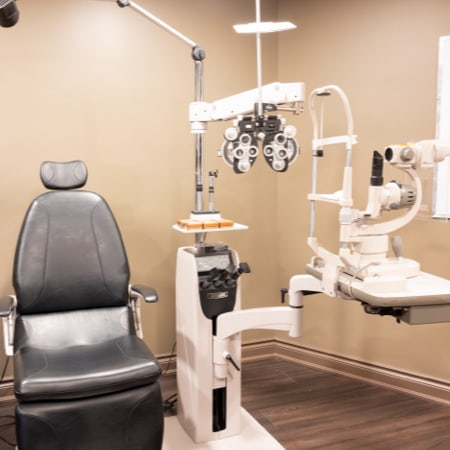
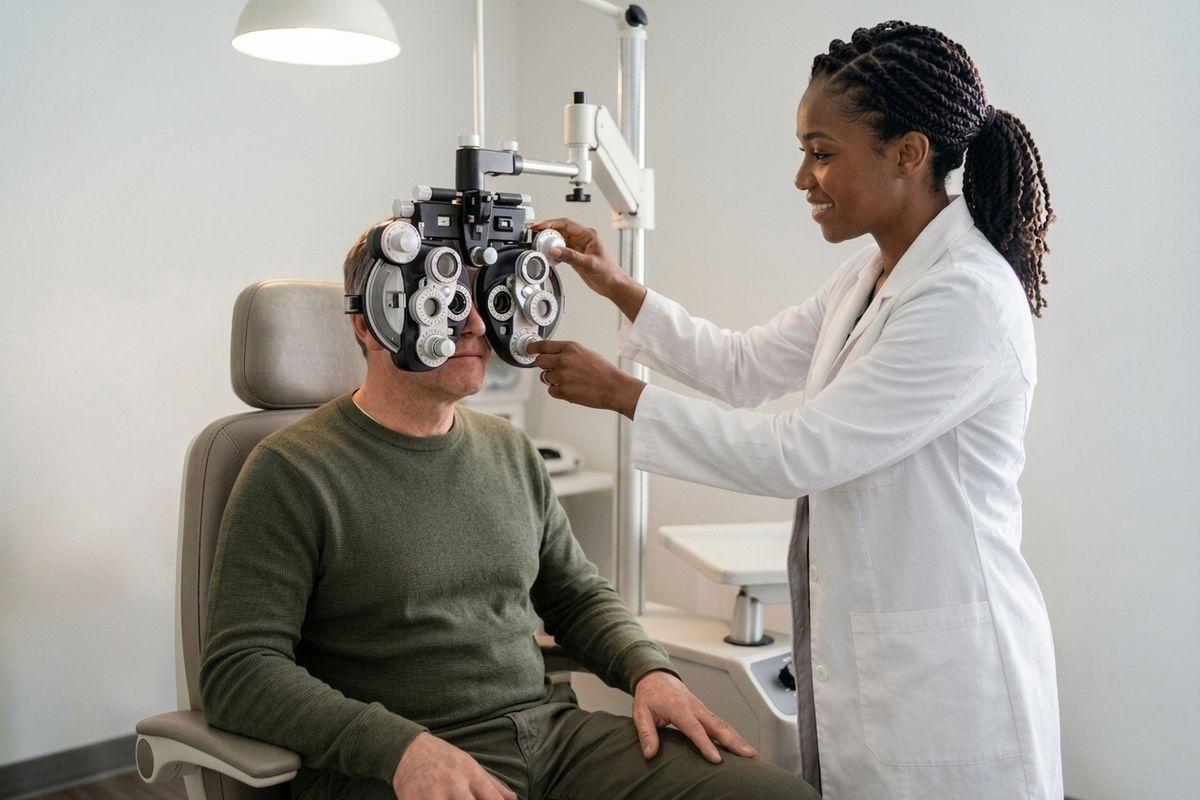
The good news is that diagnosing presbyopia doesn’t require any complicated testing. A routine eye exam that checks both near and distance vision is typically enough. Our eye care team at Orillia Optometry will consider how your eyes focus and determine whether there are any changes worth noting.
Changes like presbyopia tend to creep in gradually, and catching them early means you can address them before they start affecting your daily comfort.
Glasses & Contacts for Presbyopia
Glasses Options
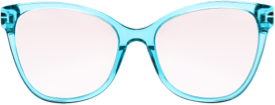
Glasses are one of the most straightforward ways to manage presbyopia. We offer several styles, depending on what works best for your day-to-day life. Reading glasses help with close-up tasks only, while bifocals and trifocals correct vision at more than one distance. Progressive lenses offer a smooth, seamless transition between near and far without the visible line you’d see in bifocals.
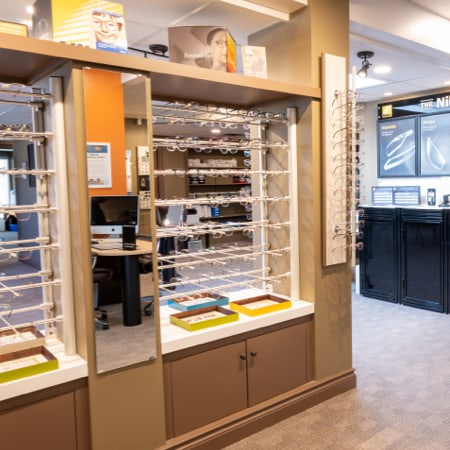
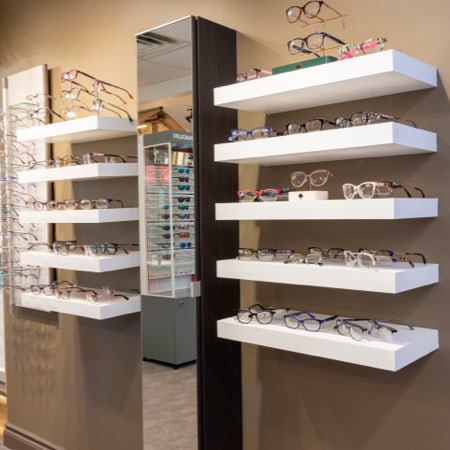
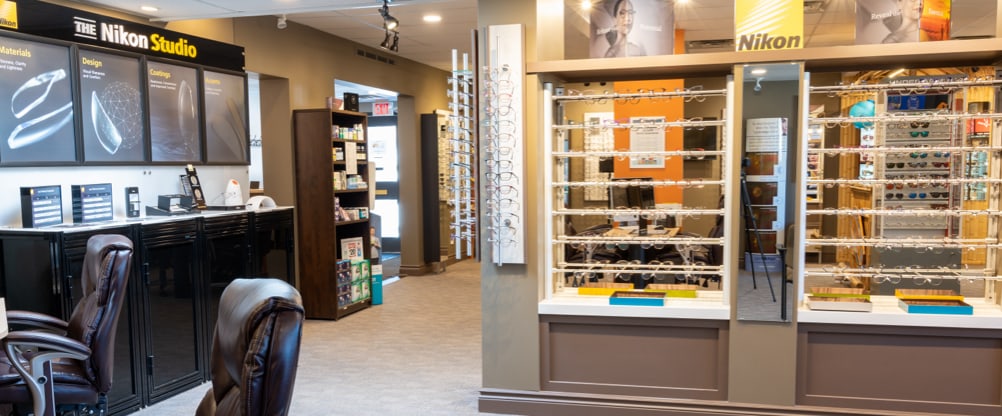
Our eyewear options at Orillia Optometry can be matched to your prescription and your lifestyle. Our frames and lenses cover a wide range of styles and vision needs, making it easy to find something that works for you.
Contact Lens Options
If you prefer not to wear glasses, contact lenses for presbyopia are worth exploring. Monovision contacts can correct each eye for a different distance, one for near and one for far. Your brain simply learns to blend the two.
Multifocal contacts handle both near and far vision in each lens, similar to how progressive glasses work. Different types of contact lenses each have their own fit and feel, so it helps to try a few before deciding.
Our team can walk you through which option suits your vision needs and comfort preferences. Feel free to explore our contact lens exams, fittings, and brands. You can even reorder your contact lenses and eye care products as needed.
Other Treatment Options Worth Knowing
Prescription Eye Drops
A newer option for presbyopia involves daily prescription eye drops that temporarily reduce pupil size. This improves your ability to focus up close for several hours at a time. The effect typically lasts up to six hours per use, making it a practical choice for situations where glasses aren’t convenient.
Surgical Options
Some laser surgery techniques can be adjusted to help with presbyopia, often by setting one eye for near vision and the other for distance (monovision).
Lens implants, often called refractive lens exchange (RLE), are another route. The procedure replaces your stiffened natural lens with an artificial one that can handle a broader range of distances.
You can discuss your options with your optometrist in order to understand what fits your lifestyle and overall eye health. Our team at Orillia Optometry offers laser eye surgery consultations to help you figure out whether that path makes sense for you.
Vision Care in Orillia Starts With a Conversation
Presbyopia is a common part of getting older, but it doesn’t have to slow you down. Whether you’re squinting at a menu or struggling through a workday on a screen, there are real, practical solutions that can make close-up vision comfortable again.
The right option depends on your lifestyle, your eye health, and what feels natural to you, which is why a conversation with an optometrist is the best place to start. Book an eye exam with our team and we’ll walk you through what’s actually causing the blur and which treatment fits how you live.