

Key Takeaways
- Bifocal lenses combine two prescriptions into one lens, with a visible line separating the distance zone (top) from the near zone (bottom).
- Your eyes move between zones naturally, with no need to move your head.
- Several lens shapes are available, and the right fit depends on your prescription and daily habits.
- An optometrist can help you decide between bifocals and progressive lenses after an eye exam.
What Bifocal Lenses Actually Do
You’re reading a menu, then glance up to wave at a friend across the room. For most people, that shift is automatic. If you need different correction for near and distance vision, single-vision lenses may not cover both tasks comfortably. Orillia Optometry helps patients navigate this kind of vision challenge, matching each person to the right lens solution for their lifestyle.
Bifocal lenses provide correction at multiple distances by combining two prescriptions into a single lens. The top portion of the lens corrects distance vision, while the bottom portion corrects near vision. A visible line runs across the lens where the two zones meet.
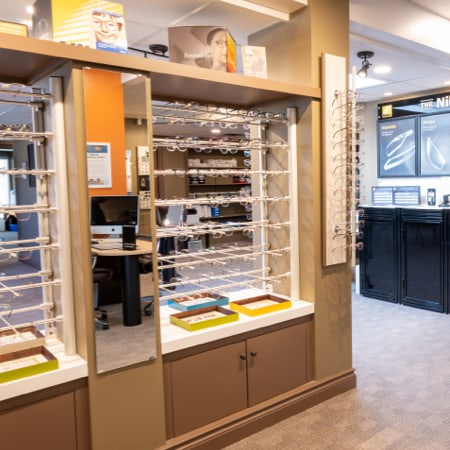
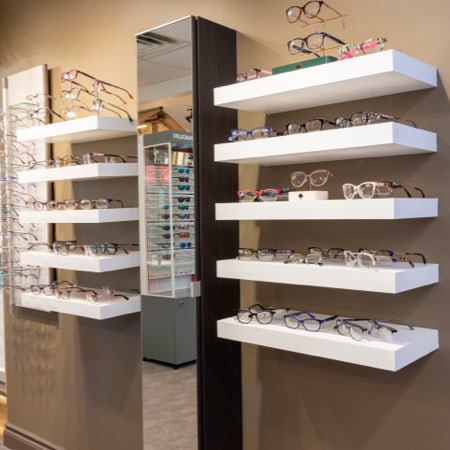
Bifocals can take a little getting used to, but most people adapt within a few days to a few weeks. If you’d like to explore your glasses frames and lens options before committing, our team can walk you through what’s available.
How to Use Bifocals Day to Day
Where Your Eyes Should Look
The concept is straightforward. You look through the top of a bifocal lens when you need to see something far away, like a road sign or a face across a room, and you look through the bottom of the lens when you’re reading a book, checking your phone, or working on something close up.
Your eyes shift between these zones naturally as you go about your day. Most people stop thinking about it after a short adjustment period.
Do You Move Your Head or Eyes with Bifocals?
For near tasks, you’ll look through the lower reading segment of the lens rather than switching glasses. It can take a little time to adjust, especially when walking on stairs, curbs, or uneven ground, so move carefully at first. With practice, most people learn to shift their gaze between the distance and reading zones naturally.
Types of Bifocal Lenses
Common Shapes for the Near Zone
The near zone at the bottom of a bifocal lens comes in a few different shapes. Each one suits different needs and preferences.
- Flat top. Also called a D-segment, this is the most widely used shape. The near zone looks like a D rotated on its side.
- Executive. The near zone spans the entire bottom half of the lens. This gives a wider reading area and can be helpful for extended close-up tasks.
- Round or ribbon. Smaller near zones that are less common, these are sometimes used for specific prescription needs or cosmetic preference.
The shape that works for you depends on your prescription and how you spend your day. Our team at Orillia Optometry can walk you through your options based on your vision needs and lifestyle.

Who Bifocals Are Typically Prescribed For
Age-Related Vision Changes
Bifocals are most commonly prescribed for adults over 40. At about this age, the lens inside the eye gradually loses flexibility, making it harder to focus on close objects. The resulting situation is called presbyopia, and it’s a normal part of how eyes change over time. Bifocals give you a dedicated reading zone without you needing to switch between two pairs of glasses.
Other Reasons a Doctor May Recommend Them
Bifocals aren’t only for age-related vision changes. Some children with certain eye alignment concerns may be prescribed bifocals to help manage how their eyes focus and work together. Adults who need correction for both near and distance vision, regardless of age, may also find bifocals a practical solution. A comprehensive eye exam can confirm whether presbyopia or another prescription change is affecting your vision.
Bifocals vs. Progressive Lenses
Key Differences to Know
Progressive lenses are sometimes called no-line bifocals, but they offer more than 2 viewing zones. Instead of having a visible line, the lens power changes gradually from distance vision at the top to near vision at the bottom, with an intermediate zone in between. This middle range can be helpful for everyday tasks like using a computer, reading a dashboard, or viewing objects at arm’s length.
Bifocals, on the other hand, have a clear, defined line between zones. Some people find this easier to adapt to. Others prefer the seamless look and the added intermediate range that progressives offer.
Which Kind of Lens Is Right for You?
There’s no one-size-fits-all answer. Your prescription, comfort level, and daily activities all play a role. Someone who spends long hours in front of a screen may prefer progressives for that middle-distance zone. Someone who wants straightforward reading correction may find bifocals more comfortable.
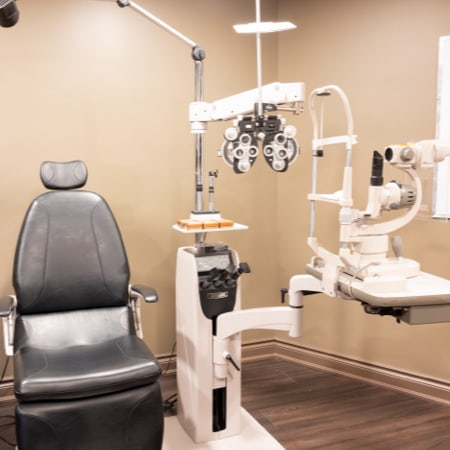
An eye exam gives your eye doctor a clear picture of your vision needs, making it easier for them to point you toward the right option.
Talk to Orillia Optometry About Your Vision Care Options
If you’ve been struggling to focus on objects up close or switching between two pairs of glasses throughout the day, bifocals might be worth exploring. The right lens choice depends on your eyes, your prescription, and how you live your life day to day.
Orillia Optometry has been serving the Orillia community in Ontario for years, offering eye exams, eyewear and contacts, and vision care solutions that match each person’s needs. Contact our team to book your eye exam and get the guidance you need to see clearly and comfortably.