

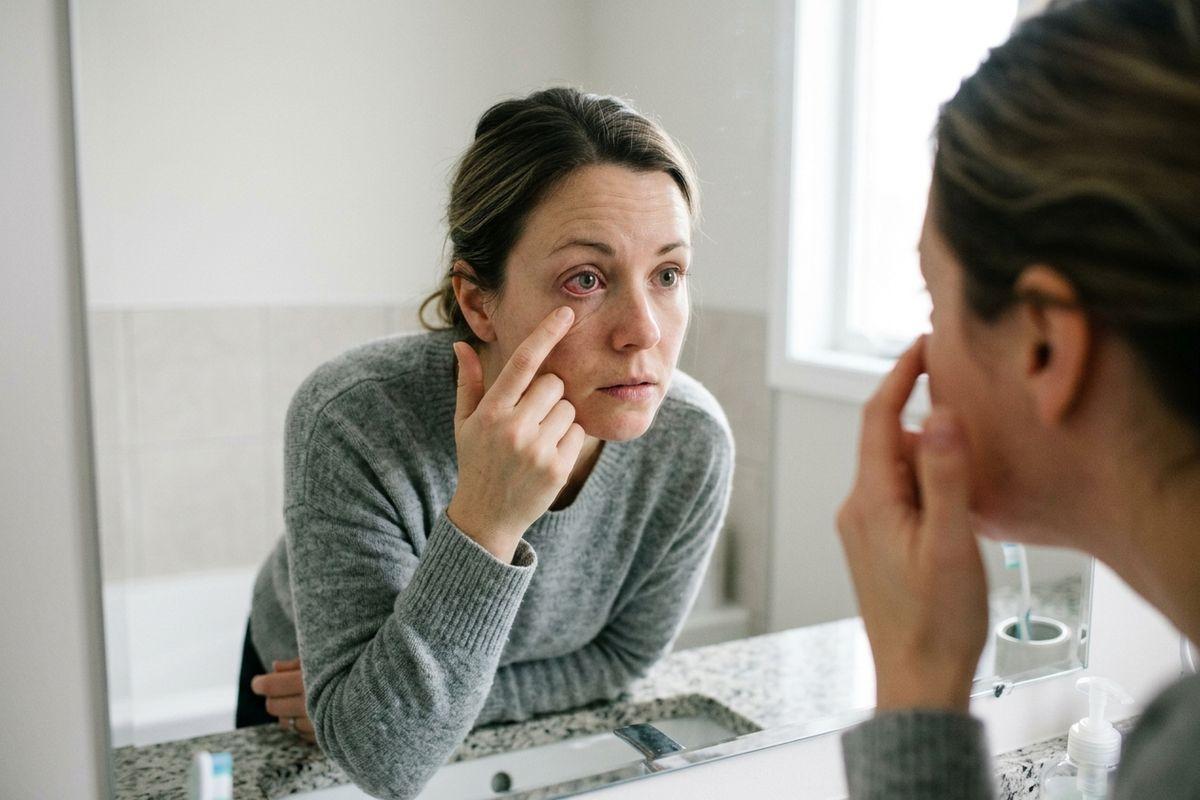
A pink, goopy eye raises the same question for almost everyone: is this contagious, and should I stay home? Most of the time you can narrow it down in about a minute, before you decide whether to call in sick or keep a child home from school.
One eye or both, the type of discharge, and whether a cold came first are the details that usually separate an infection from an allergy flare-up. Sorting out which type of conjunctivitis you have changes what you do next, and an optometrist can confirm it when the answer isn’t obvious.
What Is Pink Eye?
Pink eye is irritation of the conjunctiva, the thin, clear layer covering the white of your eye. When that layer gets irritated, the small blood vessels running through it widen, and the white part looks pink or red instead of its usual colour.
A virus, bacteria, or an allergic reaction is behind most cases. All 3 types can look similar in the mirror, so the surrounding details matter more than the colour. Vision usually stays normal, which is one of the things that separates pink eye from more serious causes of redness.
Quick Quiz of Signs to Check at Home
Run through these questions before you decide what to do next:
- Is one eye affected, or both?
- Is the discharge thick and coloured, or thin and watery?
- Did your lids crust shut overnight?
- Have you had a cold, cough, or runny nose in the past week?
- Were you wearing contact lenses when the redness started?
Signs of a Viral or Bacterial Type
Infections usually bring along more than redness. Watch for a few of these:
- Thick yellow or green discharge
- Lids stuck together when you wake up
- A gritty feeling, like sand under the lid
- Redness that starts in one eye and moves to the other
- Cold symptoms in the same week
Viral cases often follow a cold and can take up to 2 weeks to settle. Bacterial cases tend to produce heavier discharge and may respond to prescription drops.
Signs Your Pink Eye Is Actually an Allergy
Eye allergies itch more than they hurt. Check whether this sounds like you:
- Strong itchiness with watery, clear tearing
- Both eyes bothered at once
- Puffy lids and light sensitivity
- Sneezing or a stuffy nose alongside it
Pink Eye Versus Eye Allergies
The main practical difference is how it spreads. Infections can pass to other people, while an allergic reaction stays with you. That matters if you share a bathroom, a classroom, or a workplace.
Tears give you another clue. With allergies, tears stay clear and watery instead of turning thick and sticky. Timing helps too, since allergy flare-ups often follow pollen counts, dusty cleaning days, or time spent around a pet.
Other Conditions Mistaken for Pink Eye
Not every red eye is pink eye. Dry eye and contact lens irritation can both leave your eyes bloodshot, and so can a stye or inflamed eyelid margins.
Smoke from a backyard fire, chlorine from the pool, and a stretch of dry indoor air can redden your eyes for 1 or 2 days as well. A scratched cornea looks similar, but it usually hurts more than a typical case of pink eye.

How to Get Relief From Pink Eye
What helps depends on which type you’re dealing with, so start with the details you sorted out above.
Relief for Viral and Bacterial Pink Eye
A cool compress over closed lids can help ease discomfort. If the crust has sealed the lashes, hold a warm, damp cloth against them first so you can open the eye without pulling.
Artificial tears can rinse away some of the irritation while things calm down. For infectious cases, an optometrist may prescribe drops after examining your eye. Leave contact lenses out and wear glasses until the redness clears.
Relief for Allergic Pink Eye
Antihistamine drops can handle itchiness, and a cool compress works here too. Preventing allergies comes down to avoiding triggers, so avoid common allergens when you can:
- Keep windows closed on high pollen days
- Wash pillowcases weekly
- Rinse your face after time outdoors
- Limit time in dusty spaces when you can
When Pink Eye Needs an Eye Exam
Some symptoms deserve a quick appointment rather than a wait-and-see approach:
- Sudden pain or any change in your vision
- Symptoms that drag past a week or get worse
- Redness while you’re wearing contact lenses
- Discharge heavy enough to blur your sight
Sharp pain, strong light sensitivity, or blurred vision can point to something that needs emergency eye care.
How to Keep Pink Eye From Spreading
Wash your hands with soap before you touch your face. Rubbing your eyes moves germs from your fingers to the spot you’re trying to protect, so keep your hands down even when the itch is strong.
Don’t share towels, pillowcases, eye makeup, and contact lens cases. This can pass infections from one person to the next, which is how a single case travels through a household in a week. Toss any mascara or liner you used while symptomatic.
Get a Clear Answer Before It Spreads
If your eye stays pink after a few days, or you can’t tell which type you’re dealing with, the team at Orillia Optometry can take a closer look and talk through options that fit your situation. Book an eye exam today, and get the answers you need.